Can PitchBrand Get You Collabs? Test a Pitch Tool Before You Pay
What pitch tools can do, what a brand still decides, and how to check brand fit, replies, paid conversations and exit terms before paying.
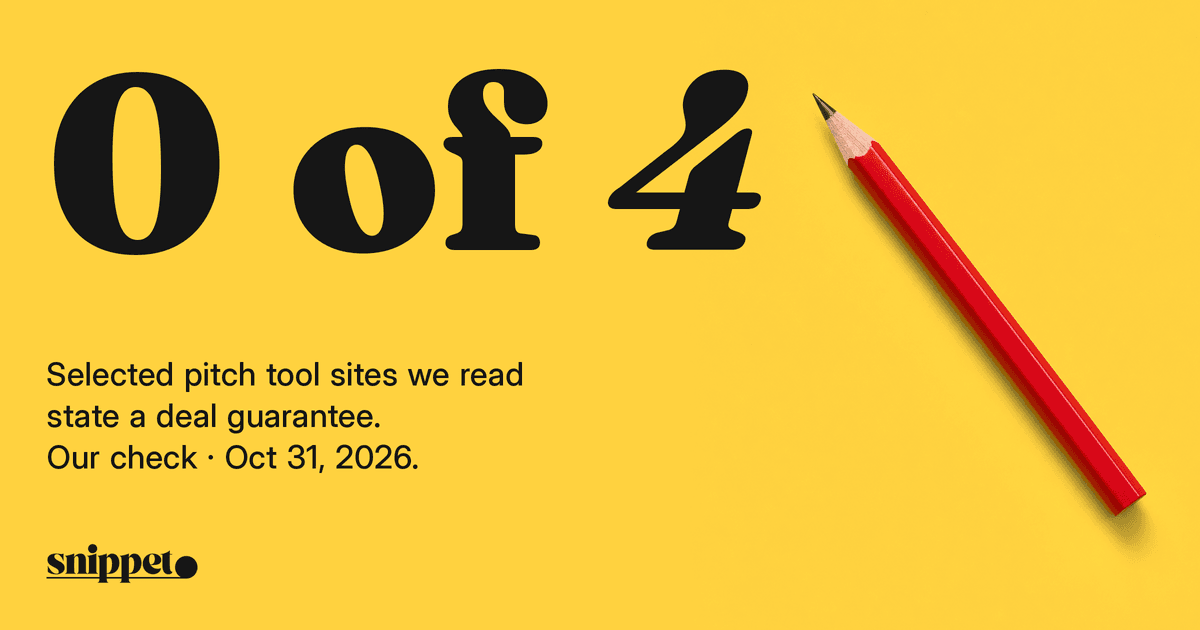
PitchBrand says it can find brands, write pitches, send from your inbox and follow up. A collab still depends on the brand saying yes; we found no stated deal guarantee on the public pages we checked for PitchBrand, Bento, Pitchlo or Snippet, which we make.
That is a check of selected pages, not a test of anyone’s booking rate. A tool may be useful without promising a deal. The useful question is what you can verify before you pay, and what would make you keep it.
A creator’s verbatim buyer question was: “OnBento, Pitchbrand, Pitchlo, Apollo, etc - Who's happy with those?” The Oct 24 Reddit thread asks about actual deals. It gives us a question to answer, not a representative satisfaction survey. Apollo is named in that question; we did not assess its product here.
What does a pitch tool actually do?
A tool can help with the work around an introduction. It can suggest brands, draft an email, send it and follow up, depending on the product and settings. It cannot choose the brand’s budget, need for content or decision to hire you.
We make Snippet, so apply the same checks to ours. We have not tested these tools against each other, and this is not a ranking.
Here is the limited public-page check, dated October 31, 2026. “No stated deal guarantee found” means only that we did not find one on those pages.
| Tool | What the checked pages say | What that establishes |
|---|---|---|
| PitchBrand | Its homepage describes brand discovery, pitches from your inbox and follow-ups. Its terms say purchases are non-refundable. | A description of outreach work and payment terms; no stated deal guarantee found on its homepage, terms or FAQ. |
| Bento | Its terms say it does not guarantee the outcome of an email exchange. | An explicit limit on outcomes; no stated deal guarantee found on its homepage or terms. |
| Pitchlo | Its homepage describes automatic pitches from your inbox. | A workflow claim; no stated deal guarantee found on that homepage. Its terms page was unavailable in our check. |
| Snippet | Its join page answers its deal-guarantee question with “No.” | An explicit limit on outcomes on our own public page. |
Sources: PitchBrand, terms, FAQ; Bento, terms; Pitchlo; Snippet’s public join page. Public copy can change. These are vendor statements, not results we independently measured.
Are the brands it picks actually mine?
Read the first proposed brand list before any outreach. For each brand, name the product, the kind of content you could make and why that content would suit the brand.
Our suggested test: would you use or demonstrate this product on camera? Can you point to relevant work you would show this brand? If either answer is no, remove it from this test. That is an editorial fit check, not a claim about a tool’s matching accuracy.
Example: a creator who films low-cost home meals might keep a kitchen storage brand and remove a luxury car accessory brand. A meal creator who also films car trips could make a different choice. The category name alone does not settle fit.
You do not need to infer a competitor’s quality from one unhappy comment. Your own proposed list is more useful evidence about whether a tool fits your work.
How do I know it is working?
Choose a review date and write down what you need the tool to help with before you start. Over that test period, track brands that fit, human replies and conversations about paid work. Keep signed work and money received separate from those early signs.
A human reply means a person answered, including a decline. A paid conversation means someone is discussing a fee or paid brief. Neither is a booked deal. Sends show activity; opens do not show that someone wants to hire you.
Example review note: “Kitchen storage brand: fits my content; human reply; asked for a quote; no agreement yet.” That gives you a next action without claiming revenue you have not earned.
Use your own history to decide whether the help is worth keeping. We have no supported reply-rate or deal-rate benchmark to offer here. A short test can also end without enough evidence to judge results. That is a reason to record uncertainty, not to buy a longer plan on faith.
For the full record of what moved, use the application-stage guide. For a next message, use the follow-up email templates.
What happens when it goes wrong?
Find the exit before entering payment details. Read the current refund terms, how cancellation works, when renewal happens and what cancellation does to work already queued. Ask support to clarify anything the page does not answer; do not assume a cancellation includes a refund.
The checked terms differ. PitchBrand’s terms state that purchases are non-refundable. Bento’s terms state that payments are non-refundable unless otherwise agreed in writing. Sponsor Mole describes a refund guarantee tied to time saved. That is a different promise from a guaranteed collab, and Sponsor Mole is outside the four-tool check above. Read the conditions on its homepage before relying on that promise.
These differences are reasons to read the terms, not a ranking of which tool works best. A card-required test period also needs a clear renewal date and cancellation route. Save the terms you accept and the cancellation confirmation.
Send settings and account access are separate checks. Our Gmail pitch-tool guide covers those; this piece focuses on the buying decision.
When is a tool the wrong buy?
Our judgement: if you cannot yet name a brand category you want to work with or show relevant work, solve that first. Faster outreach cannot supply the missing sample or choose what work you want to take.
You can make a clearly labelled unpaid sample with a product you already own. The first UGC sample guide walks through that job. No claim here requires you to buy a new product or make custom work for a brand for free.
Before paying, write one decision note: “I want help with _. I will review on _. I will count fit, human replies and paid conversations separately. I will keep, change or cancel based on ___.” Fill in the last blank using your own needs, including the time you spend reviewing the tool’s output.
A tool can help you do the outreach work. Whether that help is worth buying needs evidence from your own use, and a paid collab still needs the brand’s agreement.
What would a pitch tool have to show you before you paid for it?
Aayush Upadhyay
Co-founder, Snippet
Building Snippet, the AI talent agency that helps content creators land brand deals without agencies. Previously scaled creator partnerships at multiple startups. Obsessed with using AI to democratize talent management for the 32 million mid-tier creators who deserve better representation.
Related Articles
How to pitch brands as a small creator, with or without AI
Write a specific brand pitch, test an AI draft against your own voice, and check Gmail send modes and permissions before connecting your inbox.
Brands Rarely Come Looking for UGC Creators. Here's How to Build an Outbound Pipeline
UGC creators get little passive discovery. The marketplaces that exist are crowded, and inbound is rare. Here's how to work out the pipeline math for your income goal, and the outreach system that works.
The Complete Cold Email System for Creators — Not Just Templates, the Full Pipeline
Templates are only part of what makes cold outreach work. The rest is targeting, research, timing, and follow-up cadence. Here's the full system for sending 50 pitches per month and turning them into brand deals.
What Is an AI Talent Manager? How AI Is Replacing Creator Agencies
AI talent managers automate brand deals for creators — from discovery to outreach to follow-up. Here's how they work, what they cost, and whether they're worth it.
Frequently Asked Questions
OnBento, Pitchbrand, Pitchlo, Apollo, etc - Who's happy with those?
We have not measured user satisfaction or booking rates, and we did not assess Apollo. Check the proposed brands, human replies and paid conversations in your own use; selected public pages from PitchBrand, Bento, Pitchlo and Snippet did not state a deal guarantee.
Can PitchBrand get you collabs?
PitchBrand describes finding brands, writing pitches, sending from your inbox and following up. A paid collaboration still depends on the brand agreeing; we found no stated deal guarantee on its checked homepage, terms and FAQ.
How do I test a pitch tool before paying?
Review its proposed brands, define a review date and count human replies and paid conversations separately. Read renewal, cancellation and refund terms before entering payment details.